What is a pollinator garden?
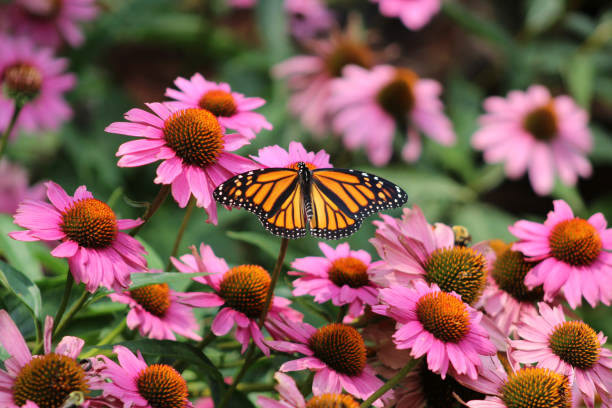
Pollinator gardens and bee hotels help create a healthy environment for native plants and insects by providing spaces for them to make nests along with the food required to survive. There are over 700 species of native solitary bees, butterflies and moths in New Hampshire-- all of which seek shelter in native plants and play a big part in pollinating.
By incorporating more green spaces and native plants into our urban environments, we can provide homes for them within the community. The native plants in the garden provide food through their pollen, nectar, and leaves and shelter for our pollinators over the winter.
Case Study
Step 1: Provide Food for Pollinators
At least three different types of nectar and pollen food source plants for each season*
At least four different types of caterpillar host plants (H)
Minimum of nine different types of plants native to the Northeast region
Step 2: Provide Water Sources for Pollinators
Birdbath or shallow water source
Butterfly puddling area
Water garden or pond
Local spring
Natural body of water, such as a lake or river
Step 3: Provide Shelter for Pollinators
Spaces of bare ground
Rock pile or wall
Dead wood
Bee boxes
Leave garden cleanup until late spring
Step 4: Safeguarding Pollinator Habitat
Ensure pesticides are not used in the area being certified
Do not acquire invasive ornamental plants
Develop a plan to actively remove invasive plants
Implement at least 3 conservation practices
Garden Inspiration
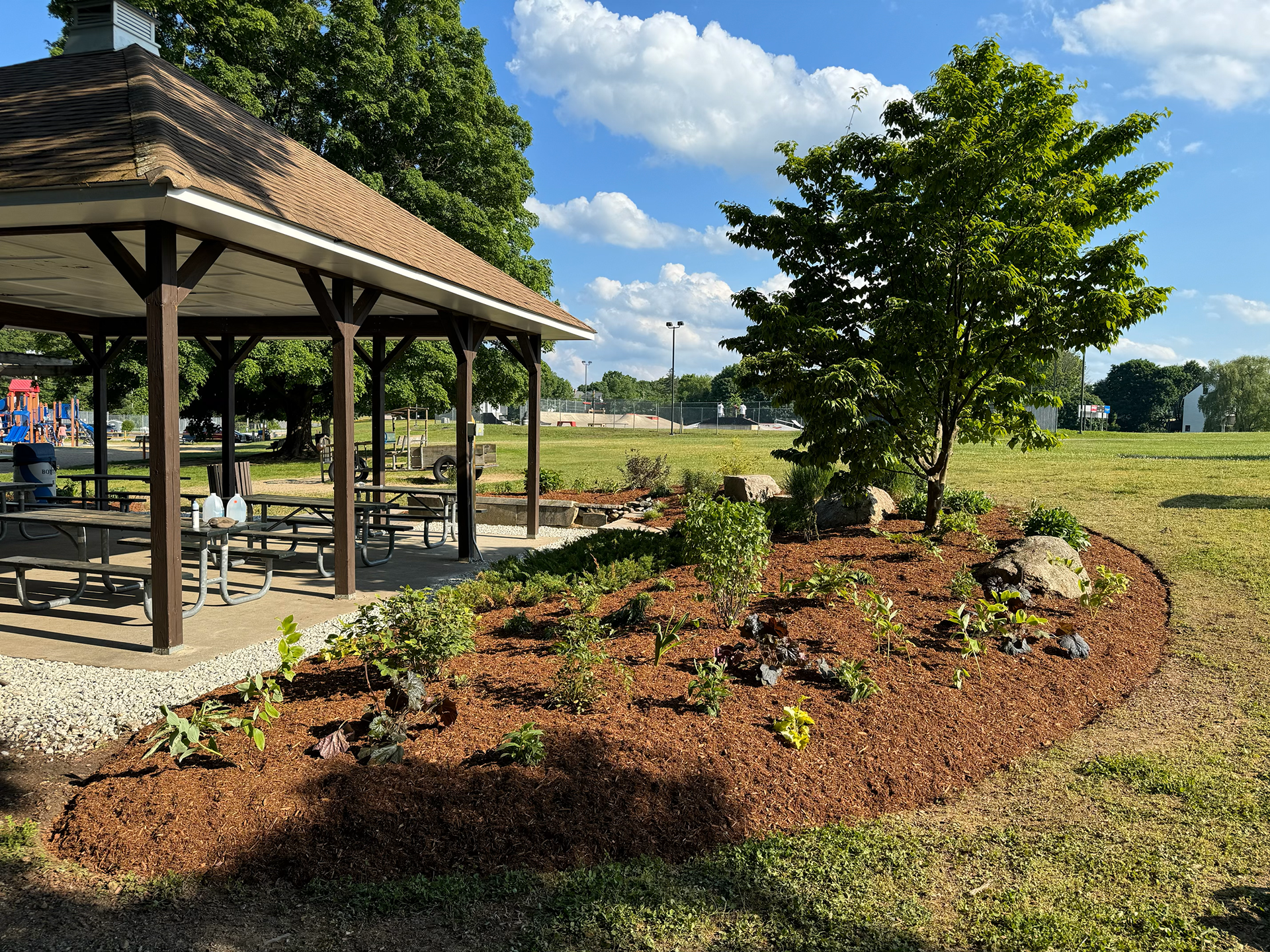
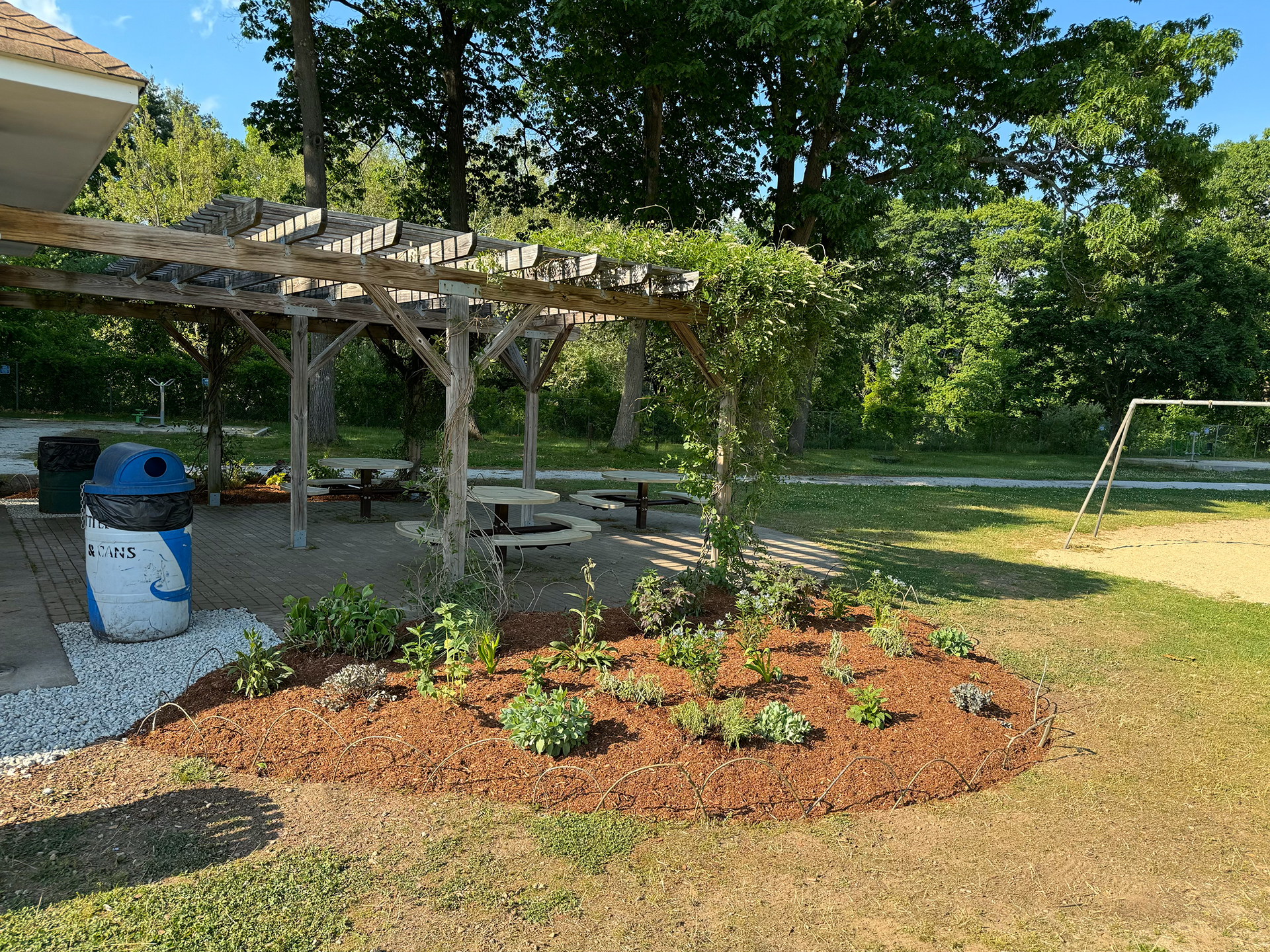
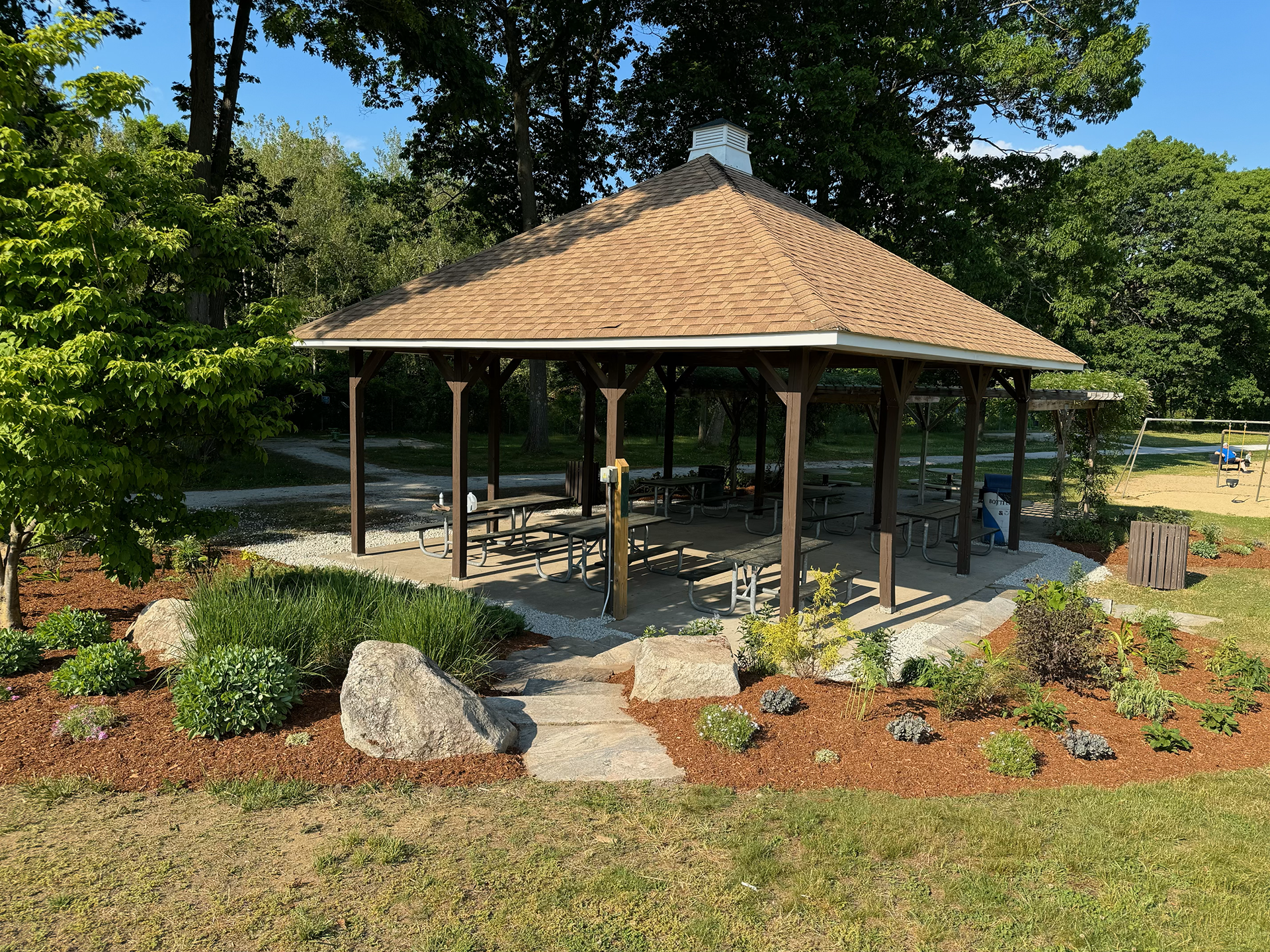
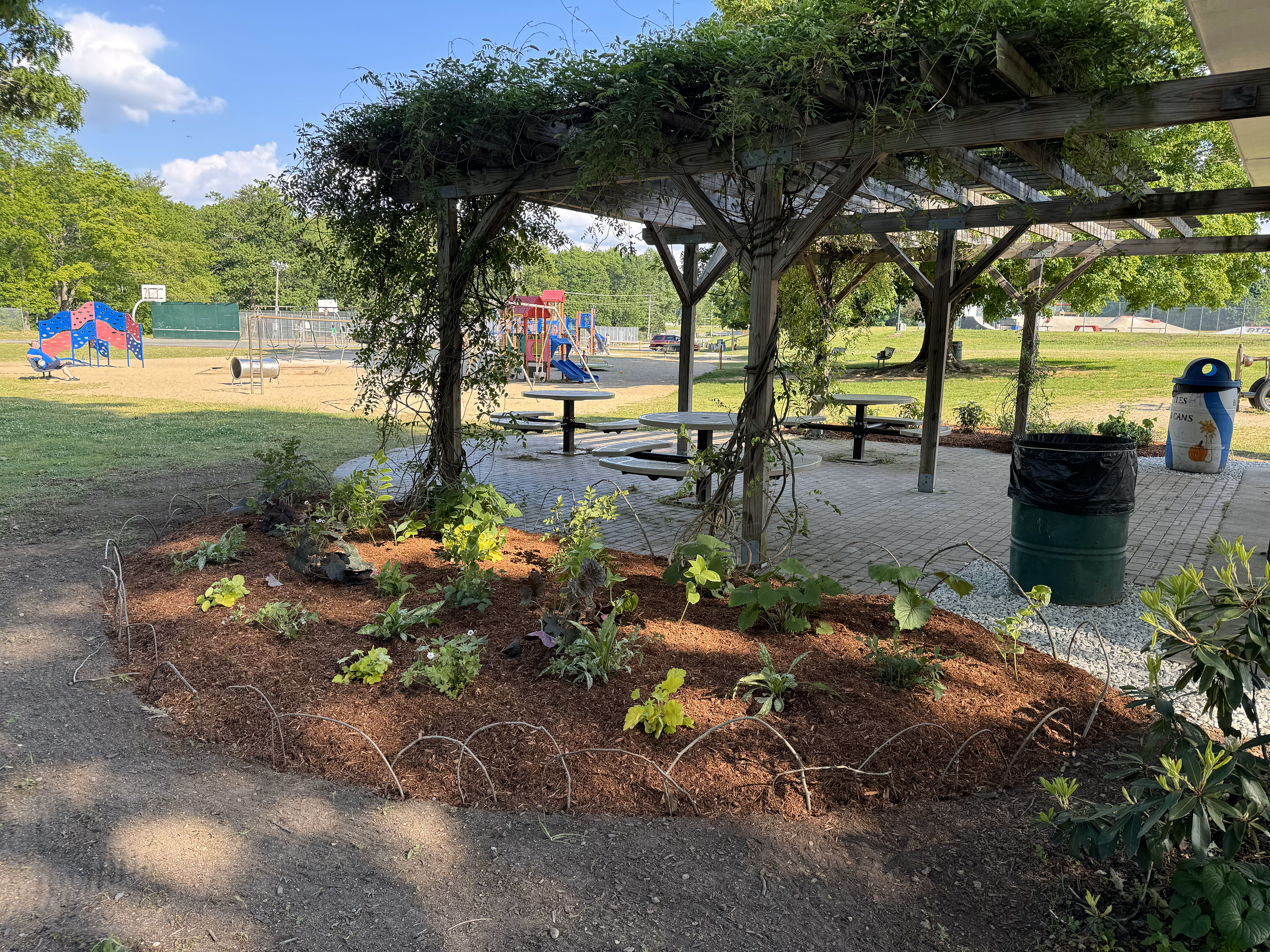
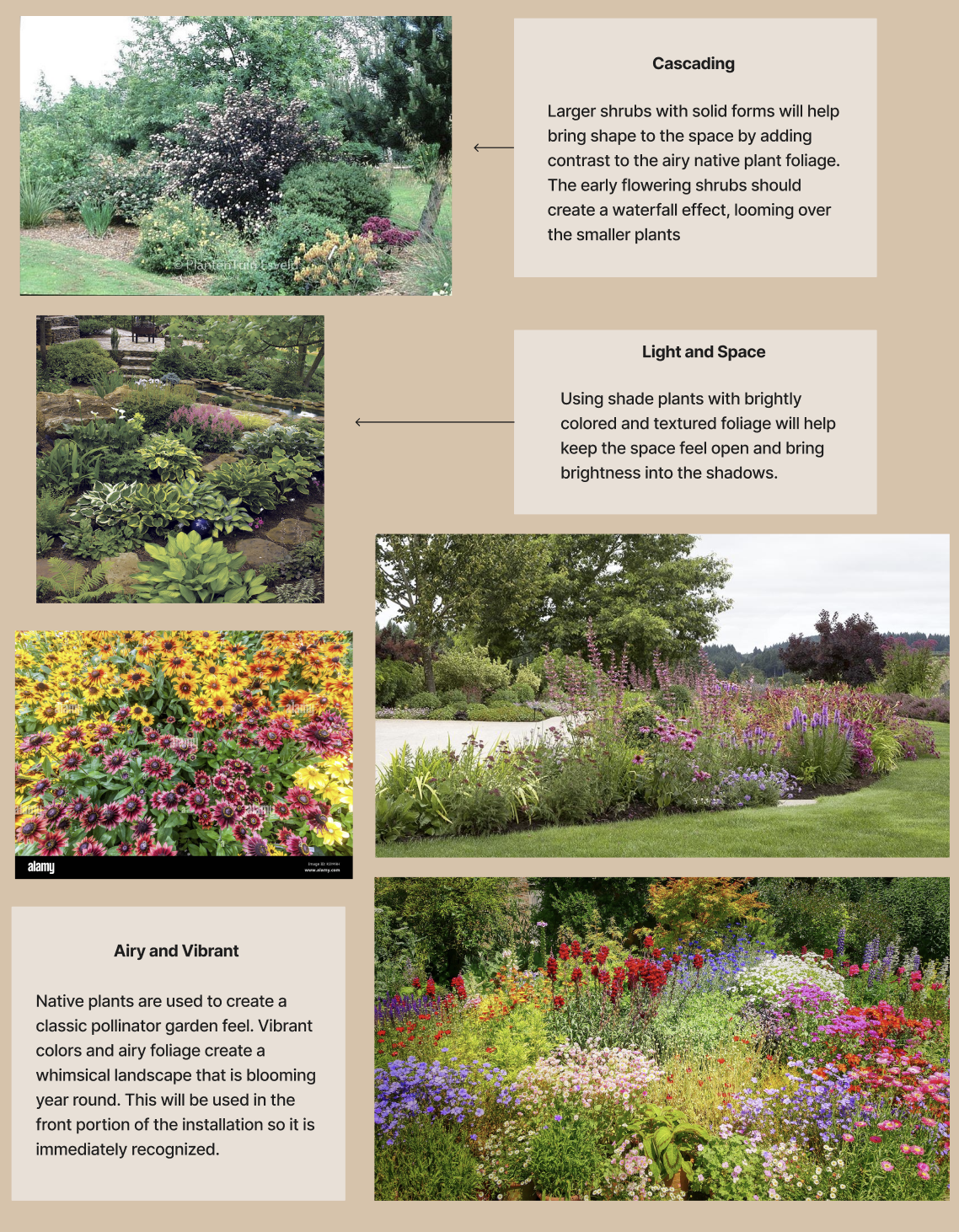
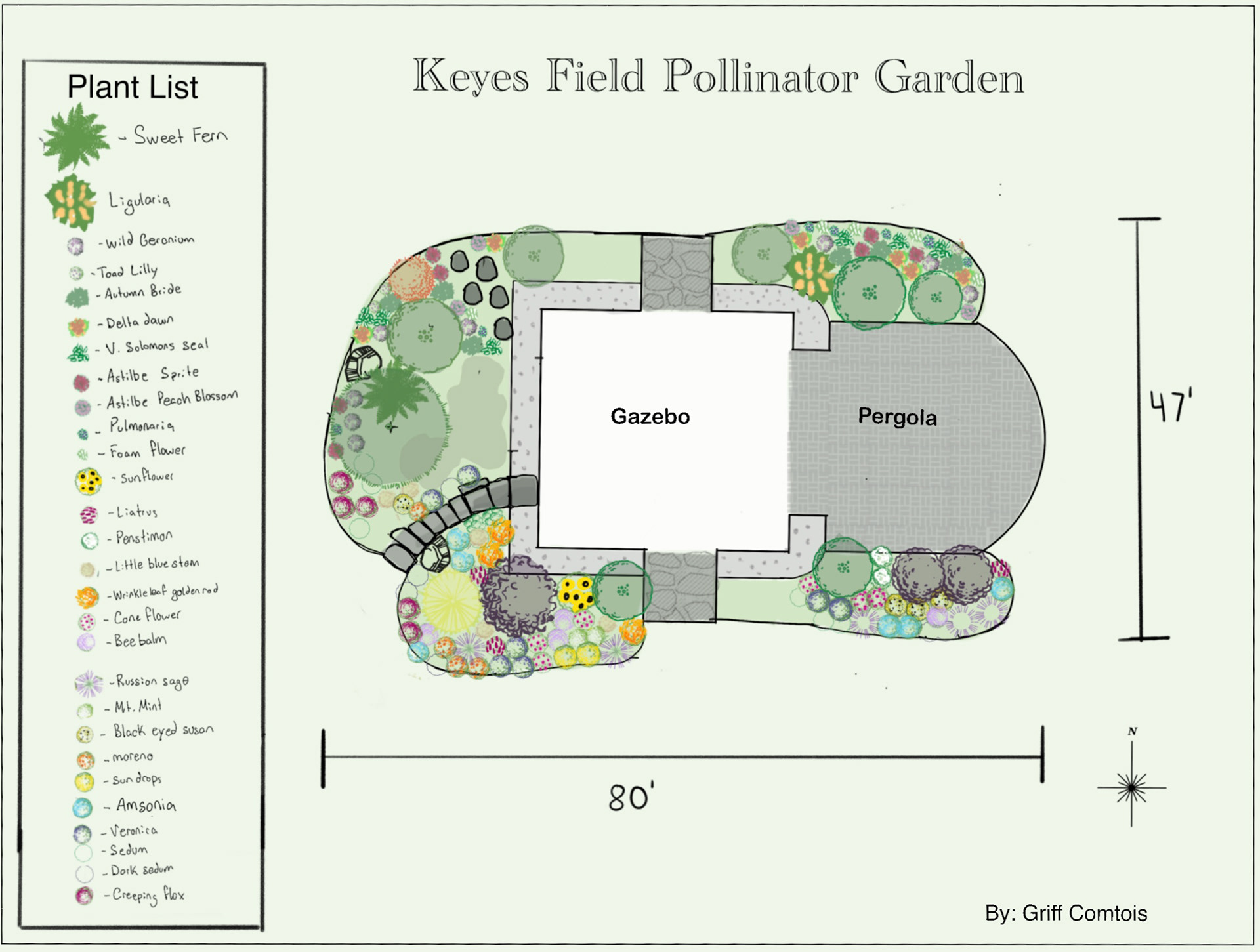
In creating this garden space, I aimed to bring a classic pollinator garden feeling while creating a warm and welcoming space for groups to take lunch breaks or individuals to find a bit of solace surrounded by nature. The front beds contain bright and consistent blooms, resembling the traditional pollinator garden. Swaths of pink, purple and yellow outline the larger bushes, drawing in your eyes as well as the pollinators. Transitioning to the back, the garden begins to take shape with more defined forms of the dogwood, creeping juniper and heuchera. The draw of bright colors is swapped with intricate variegations and brightly patterned foliage that creates a feeling of open space.
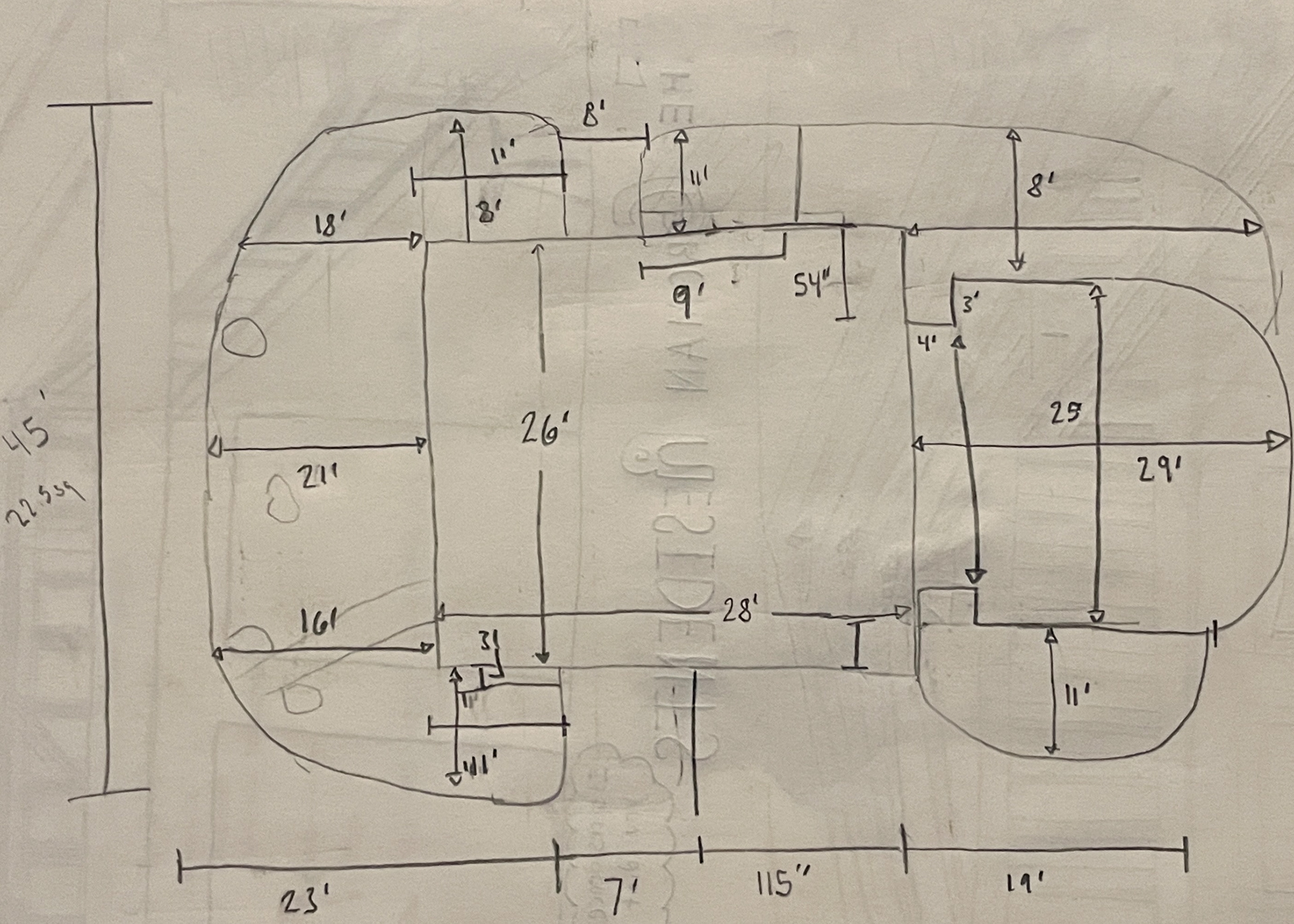
Site Survey
Design and Iteration
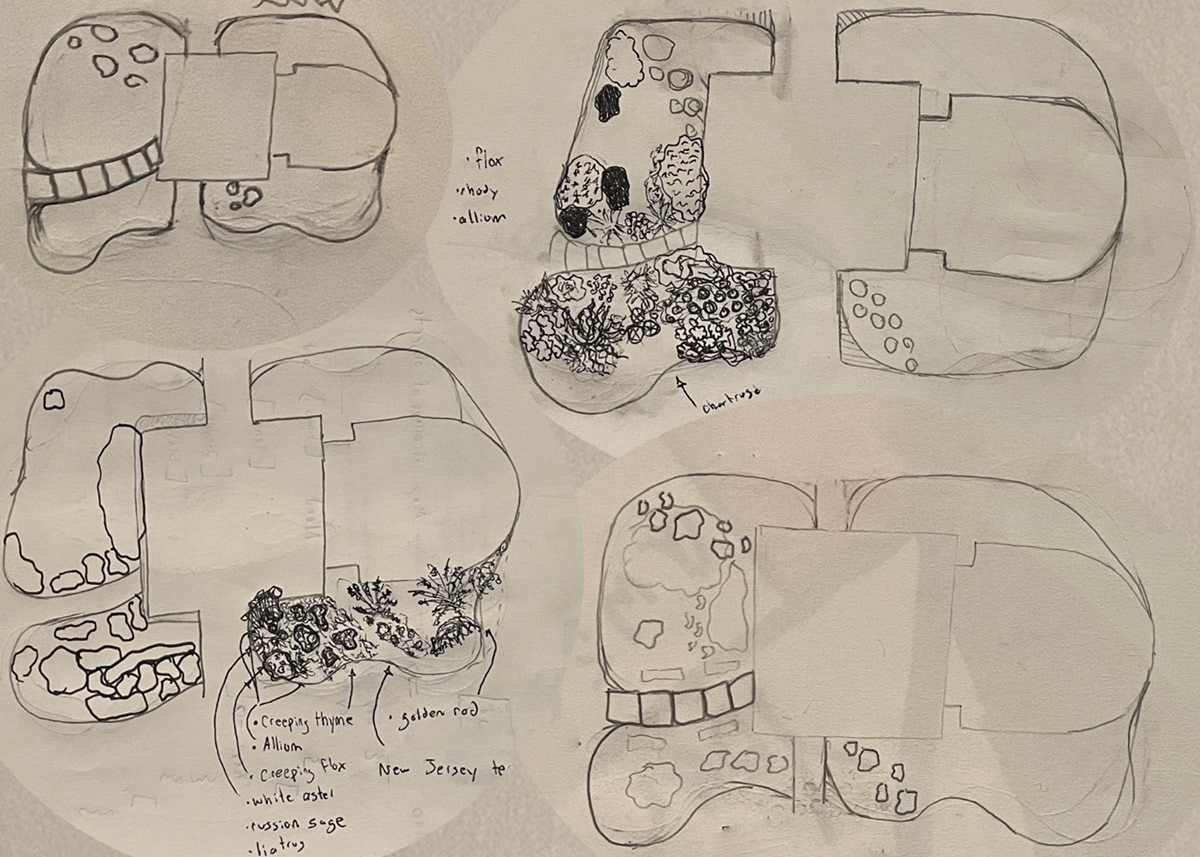
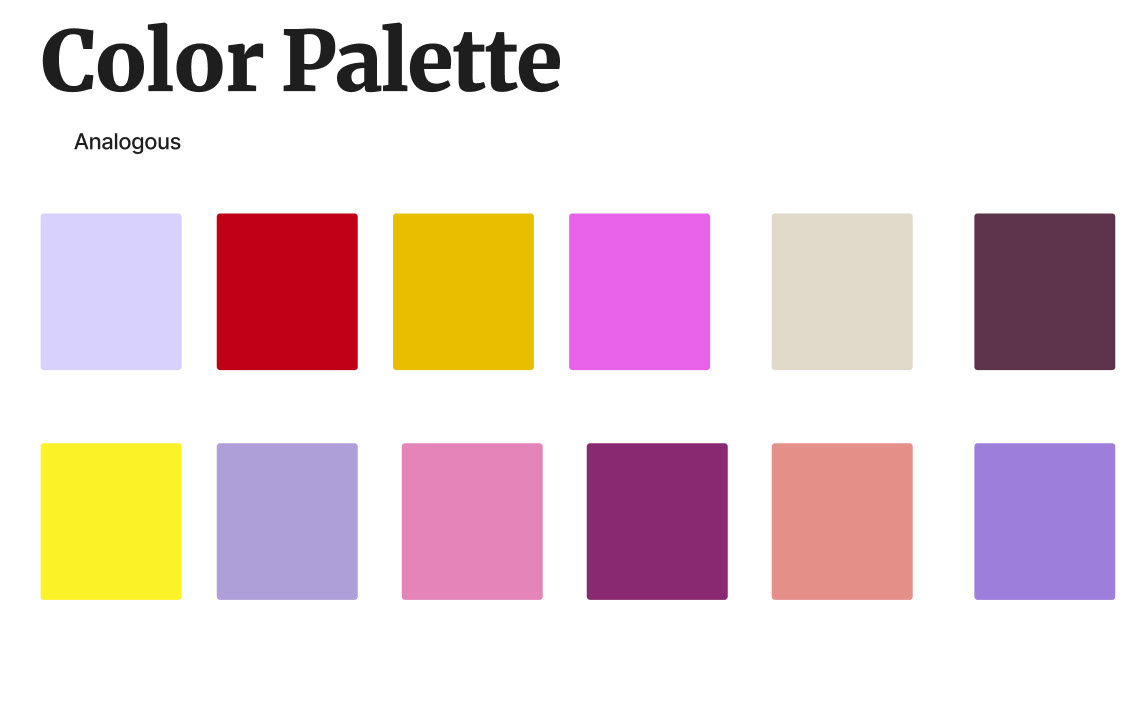
Throughout my process, I explored many different factors concerning the gardens function and forms. The size and shapes of the garden beds were increased and traffic flow was taken into consideration. Trying to match my desired color pattern, I also researched native plants accounting for bloom times, plant needs, heights and colors. Through iteration I was able to generate a final list of desired plants.
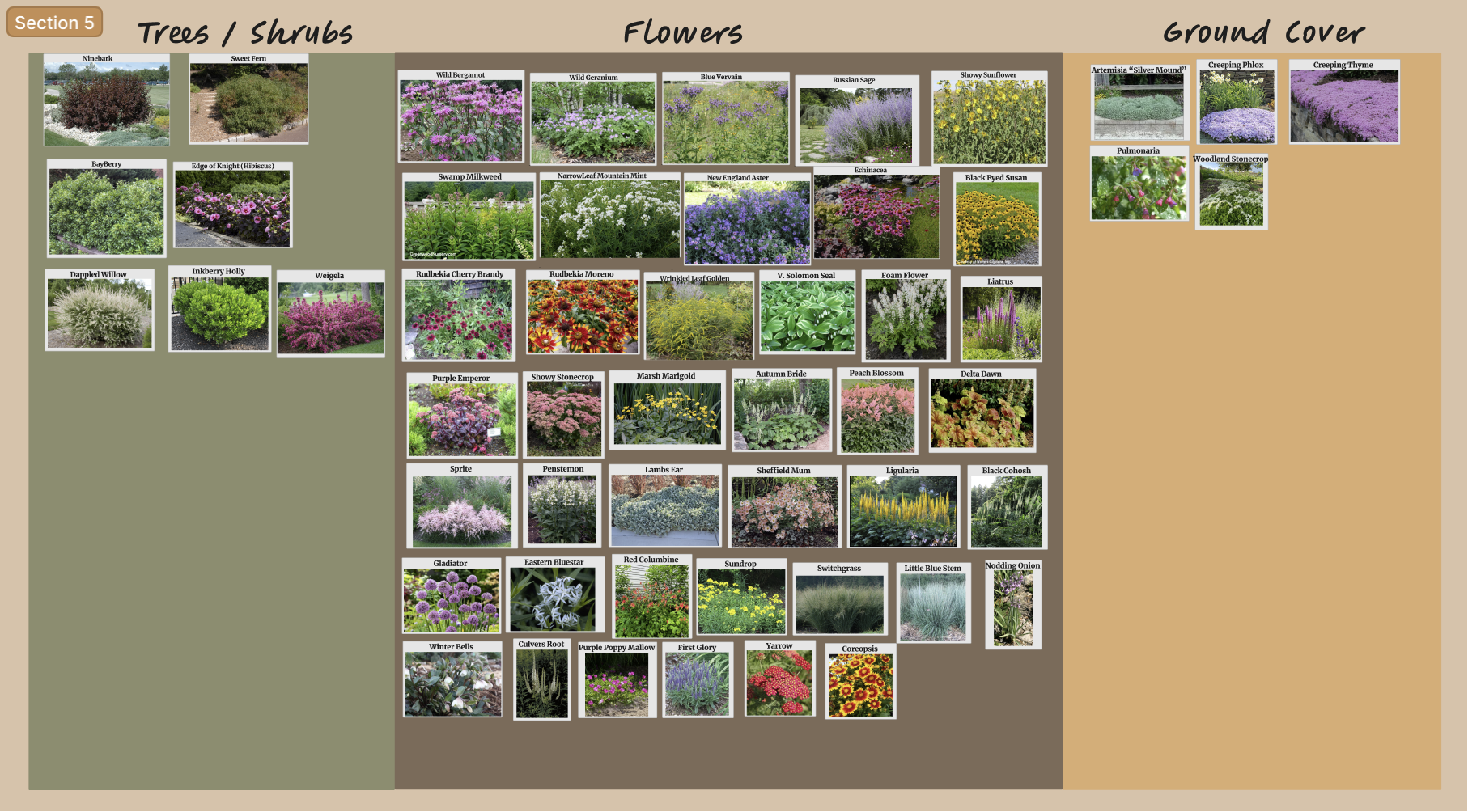
Once satisfied with plants that would withstand the various site conditions and meet my design requirements, I placed them in tentative locations throughout the garden. This helped visualize the different blooms, heights and textures, allowing me to make adjustments to the design.
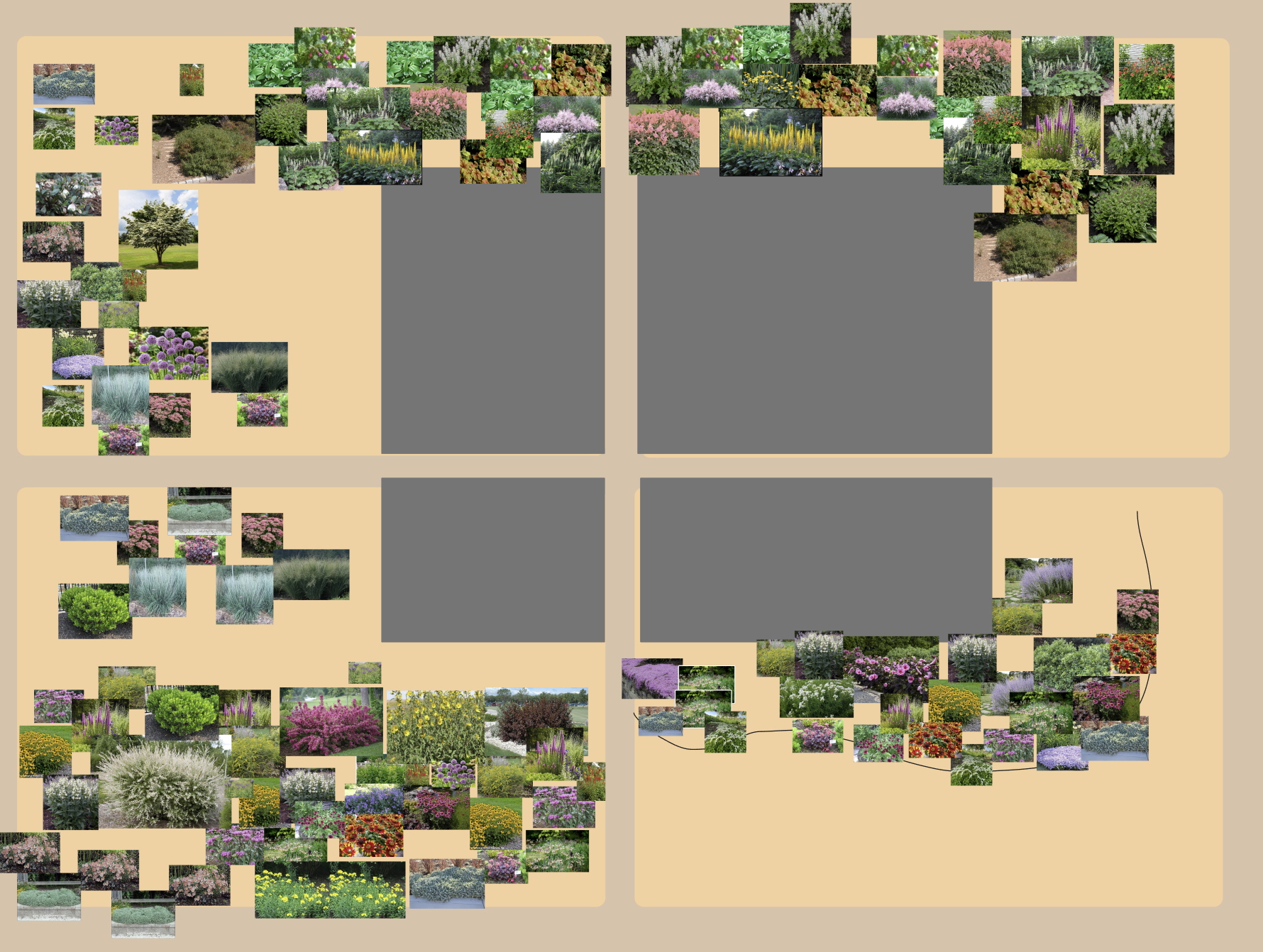
Plant Placement Visualization
Final Design
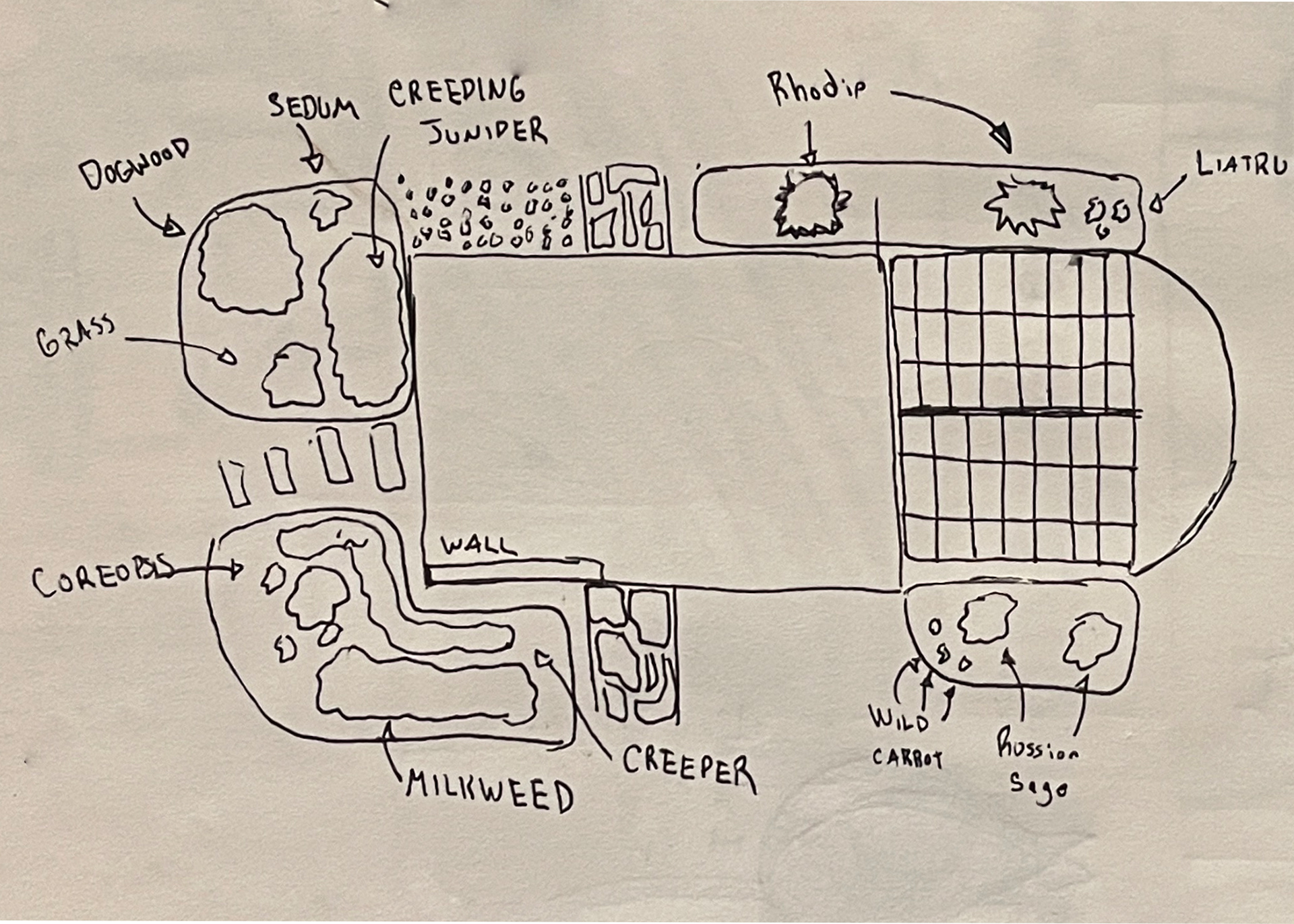
Using a 1x1 ratio I was able to create a site map and place plants as swaths, according to their heights and spreads. Paying attention to create balance in the design. Mirroring plants with siblings of similar shape, color or texture helped create a cohesive feel.
Results
Thanks to the help of 10 volunteers in the community we were able to install over 12 native species and 150 new plants at the park! This space is now cared for by myself and the help of the public works department.